
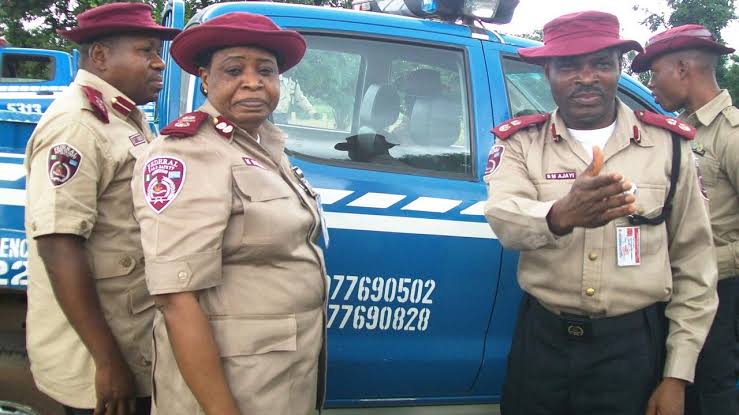
Integrity on the Highways: FRSC Rewards Osun Officer Who Rejected Bribes 104 Times in July
OVL News-August 2025 |Nigeria
A Hero in Uniform
In a system where bribery has almost become routine, an officer of the Federal Road Safety Corps (FRSC) in Osun State has stunned Nigerians by rejecting bribe offers 104 times in July 2025 alone.
The officer, celebrated by the FRSC under its “Integrity and Service Excellence Initiative”, was honored at the state command headquarters in Osogbo.
Corps Marshal Dauda Biu described the feat as “a rare show of patriotism, discipline, and service above personal gain.”
For Nigerians weary of widespread corruption in law enforcement, this story offers a glimmer of hope. But it also raises uncomfortable questions: Why does rejecting a bribe seem extraordinary in Nigeria? And why is corruption so entrenched in the agencies meant to enforce the law?
Since its establishment in 1988 during the Babangida regime, the FRSC has played a critical role in road safety. With Nigeria ranking among the world’s most dangerous countries for road travel, the Corps’ mandate is clear: reduce crashes, enforce traffic laws, and protect lives.
Yet, corruption has cast a long shadow over its operations.
A 2017 Socio-Economic Rights and Accountability Project (SERAP) survey revealed that 37% of commercial drivers admitted to paying “settlements” to road safety or police officers to avoid penalties.
The United Nations Office on Drugs and Crime (UNODC) in 2020 estimated that Nigerians pay over ₦675 billion in bribes annually, with police, customs, and road safety officials ranking among the top recipients.
Transparency International’s 2022 Corruption Perceptions Index placed Nigeria 145th out of 180 countries, signaling how deeply graft has corroded public institutions.
According to Osun Command records, the officer in question turned down over a hundred bribe attempts within one month. These incidents ranged from drivers offering as little as ₦500 to commercial fleet operators trying to “settle” with larger sums running into tens of thousands.
An FRSC source hinted that the total money rejected could have reached “several hundred thousand naira.”
But for the officer, it was about principle. “My job is to save lives, not to compromise them,” he reportedly told colleagues.
This is not the first time FRSC has spotlighted its officers for honesty:
2013 (Anambra State): An officer returned ₦200,000 forgotten in a bus by a commuter.
2016 (Ogun State): Two officers received commendations for resisting cash inducements during a special patrol.
October 2021 (Abuja): Two FRSC men rejected a ₦1 million bribe from a traffic violator transporting contraband.
These isolated acts, though laudable, often stand in stark contrast to the lived experiences of motorists who regularly complain about extortion on Nigeria’s highways.
Experts argue that bribery is less about individual morality and more about systemic incentives.
Professor Ayo Olukotun, a political scientist, explains:
“When officers are poorly paid and inadequately supervised, corruption becomes a survival strategy. Integrity must be institutionalized, not left to personal choice.”
In 2023, the FRSC budget allocated ₦27 billion for operations nationwide, but welfare provisions remain limited compared to rising inflation and the high cost of living. For many field officers, bribes are a tempting supplement to meager salaries.
Motorists in Osogbo shared mixed reactions to the award:
Commercial Driver, 52: “I commend the officer, but most of them still ask for something. Sometimes, if you don’t settle, they delay you.”
Student, 23: “It’s inspiring. We need more officers like him. Maybe Nigeria can change.”
Civil Society Leader, Olusola Adeyemi: “Celebrating integrity is good, but the bigger fight is reforming the entire system that makes bribery an expectation.”
The problem is not unique to the FRSC.
Nigerian Police Force: In 2020, a NOIPolls survey revealed that 46% of Nigerians reported being asked for bribes by police officers within a 12-month period.
Nigeria Customs Service: A 2022 investigation by the Independent Corrupt Practices Commission (ICPC) showed that customs officers at border posts collected billions in illicit payments annually.
In this broader context, the Osun FRSC officer’s action looks less like a miracle and more like a challenge to the system.
Nigeria records some of the highest road fatalities in Africa. Between 2013 and 2023, the FRSC reported over 35,000 deaths and 120,000 injuries from road crashes. Many of these accidents are linked to violations that could have been prevented if officers enforced laws without compromise.
“When an officer takes ₦500 to overlook an overloaded bus, he may be signing a death warrant for 18 passengers,” warns road safety advocate Funmi Olayinka.
Analysts suggest that rewarding integrity must go hand in hand with policy reforms:
1. Cashless Penalties: Expanding e-fine systems to reduce physical cash exchanges.
2. Stronger Oversight: Random monitoring and undercover operations to track officer conduct.
3. Better Welfare: Improved salaries, insurance, and housing for officers.
4. Public Accountability: Hotlines and whistleblower systems for motorists to report extortion.
For now, the unnamed Osun officer has become a symbol of hope. His story has gone viral on social media, sparking debates about whether integrity can thrive in a system long marred by corruption.
As Nigeria continues its fight against graft, his example proves that while corruption may be common, it is not inevitable. One officer, one act, one rejection,104 times in one month, has shown that integrity is still possible on Nigeria’s highways.
