
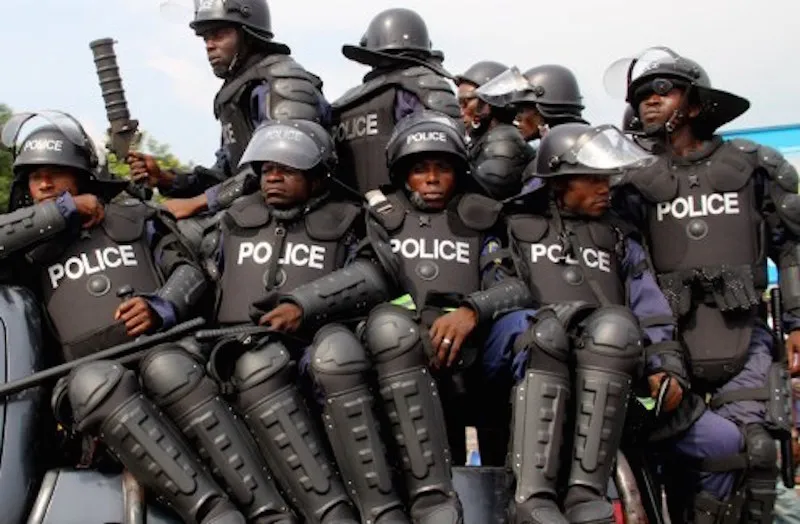
Police Back Down on Tinted Glass Enforcement Amid Public Outcry
Port Harcourt |October 10, 2025.
In a surprising policy reversal, the Nigeria Police Force (NPF) has announced the suspension of its enforcement on vehicles with tinted glass across the country, a move that has sparked widespread public reaction and renewed conversations about citizens’ rights, policing reform, and national security.
The use of tinted glass in vehicles has long been a contentious issue in Nigeria. Originally introduced under the Motor Vehicles (Prohibition of Tinted Glass) Act of 1991.
The law sought to curb criminal activities such as armed robbery, kidnapping, and smuggling, crimes often committed with vehicles shielded by dark, non-transparent windows.
In 2012, the police under the administration of then Inspector-General Mohammed Abubakar intensified enforcement nationwide, requiring motorists to obtain special permits from the Force Headquarters in Abuja.
However, the process was often marred by bureaucracy, alleged extortion, and arbitrary arrests, leading to widespread complaints from citizens and motorists’ unions.
Over the years, enforcement of the tinted glass regulation became one of the most criticized aspects of police-citizen interaction. Many motorists recounted harrowing experiences at police checkpoints, where officers used the law as a pretext to demand bribes or unlawfully detain vehicle owners.
The situation reached a tipping point in 2021, when the then Inspector-General of Police Usman Alkali Baba temporarily suspended the issuance of new tinted permits due to what he described as “abuse and security concerns.”
Civil society organizations, transport associations, and human rights advocates continued to pressure the Force to either review or abolish the policy.
Their argument: not every car with factory-fitted tinted glass is criminally motivated, and ordinary Nigerians should not be criminalized for manufacturers’ design choices.
According to a statement released by the Force Public Relations Officer, ACP Muyiwa Adejobi, the recent decision to suspend enforcement was made “in response to public concerns, administrative review, and the need to streamline security operations.”
Adejobi clarified that while the police remain committed to maintaining internal security, the new directive aims to “reduce friction between law enforcement officers and the public, especially in urban areas where factory-tinted vehicles are increasingly common.”
He further explained that ongoing consultations with the Federal Road Safety Corps (FRSC), the Ministry of Transport, and the National Assembly will determine the next phase of regulation, one that “balances public safety with citizens’ convenience and rights.”
Motorists across Port Harcourt and Lagos have welcomed the move as a “relief long overdue.”
“I’ve been harassed several times for driving a factory-tinted car,” said Chijioke Nwosu, a ride-hailing driver. “Even when I showed my vehicle documents, they still asked for a ‘permit’ I didn’t know how to get.”
Similarly, Mrs. Ekaette Johnson, a businesswoman, noted, “The old system was confusing and exploitable. Every officer seemed to interpret the law differently. This suspension gives us breathing space.”
However, some security analysts caution against a total ban on enforcement.
“Criminals can easily exploit this loophole,” warned Dr. Benson Orogun, a criminologist at the University of Port Harcourt.
“The police must adopt a digitalized permit system that distinguishes legitimate users from offenders without compromising public safety.”
Experts and civil society groups are urging the police to leverage technology in future enforcement.
“The focus should be intelligence-driven policing, not random stop-and-search,” said Ayo Obata, Executive Director of the Policy Advocacy Network. “With vehicle tracking, surveillance, and national database systems, the police can monitor threats without violating citizens’ rights.”
The NPF’s decision signals a step toward policy reform and improved community relations. Yet, the real test lies in whether this reversal translates into lasting structural change within the force.
For now, Nigerian motorists can drive with fewer fears of harassment, but the debate over security, privacy, and law enforcement accountability remains far from over.
This News Is Reaching You From Ogulaha Vanguards Limited..
The True Face Of Niger Delta.
We Tell Your Story Better.
Reach us at,
Call us at,
080 51 67 09 22
080 25 26 09 91
